7/09/2013

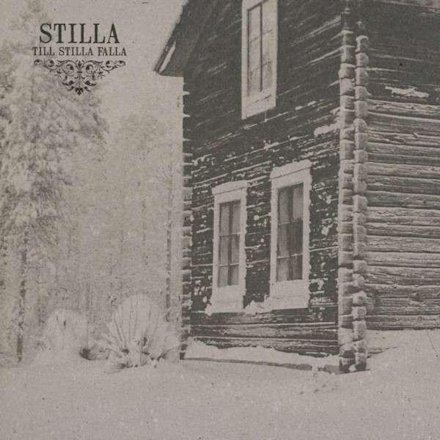
Stilla - "Till Stilla Falla" 2013

Stilla
"Till Stilla Falla"
Nordvis Produktion
2013


I have never had a bigger interest in a swedish scene. Of course I know this more “popular” bands (if I can say such thing about Marduk or Abruptum…), but underground is more or less enigma for me. Why I am writing such an idiotic stuff? ‘cause Stilla comes from Sweden (what a surprise!), and was founded by musicians of more or less known underground bands. The problem is, I know quite good only one of them (Armagedda).So please, forgive me if I will be not comparing their other bands with Stilla.
And what Stilla is playing? Well, let say it’s black metal, but in his softer version (with lyrics about a nature, of course in Swedish). My first association was polish Furia. But polish musician makes wild music, with dirty sound. Music of Stilla is different – the production of this LP is, as I’ve written – “soft”. So even there is quite many quick tempos with blast-beat usage, it still sounds not so aggressive.
A vocalist screams in a manner of his past time in Armagedda – so it is very raw (to compare – a bit like vocals on “Panzerfaust” by Darkthrone). For me it’s a big advantage – he sounds like a possessed narrator of some weird story. Another great part of this album are clean vocals performed by guitarist Par Stille. They create very melancholic, “cold” atmosphere (like in Hinsides Dagen or Aldrig doden minnas).
Also a bassist makes a great work. His instrument is prominence, so it is an opposite of typical black metal album hehe. Some parts makes a very good impression, like his quick playing mixed with whispering vocals in aforementioned Hinsides…
Worse is playing of guitarists. Supposedly he makes a good job – his riffs sound very Scandinavian, and suits to music. They sound like I have heard it. And here is my main problem; even if I am after many replays, I am not in 100% sure what I think about this album. When I listen to it, than I feel “yes, it’s a quite good thing”, but when it ends I can walk away and do other things, without often thinking about another replay. I think that there is not enough those “memorable” moments, like beautiful choirs in 4th track. Young fan of black metal, when hear it, will propably say “wow, that’s fantastic”!. But I heard riffs like on Till Stilla Falla too many times to be impressed.
To sum it up: Stilla recorded quite good album, which I will listen to from time to time. But I hope they will record something more unexpected in the future, and this task belongs mainly to guitarist. 

Rate: 7/10
Vladyka 2013

Tracklist:
1. Tidlosa vindar
2. Aldrig dodens minnas
3. Askormen
4. Hinsides dagen
5. Alt ar Aater
6. Till stilla falla

7/02/2013

Introduction to paganism - part IV - celtic tradition


Introduction
This article contains only basic information about celtic pagan traditions. If you want to learn more – read some books, or visit websites that I recommend you at the end of this text.
This topic is really long and hard to present. So if you have good knowledge about it, and you will see some mistakes – simply write to me.

Sources and historical background
The ancient Celts settled vast lands from Ireland and Britain on the north, to northern Italy, Spain and Balcans on the south. They were living in what is now called France on the west, and in part of Czech Republic on the east, and even in Minor Asia (being known there as “Galats”). They were great warriors and craftsman. But that was in VII-III B.C. In following years, they were slowly conquered by Romans, Germanic and Daco-Thracian tribes. The only free celtic lands were still lying in modern Scotland (settled by Picts), Wales and Ireland.
Celtic pagans haven’t written themselves about their beliefs. The tradition existed in word of mouth, being guarded and cultivated by druids – a rank of priests, medicals, historians, astronomers, philosophers and scientists. I will write about them in other article.
Our main sources are texts of celtic neighbors – Romans and Greeks. The second part of texts are manuscripts of Christian monks, who were recording old celtic tales. They were using a names of celtic deities and heroes, and were writing about old festivals, but in Christian vain.
Also our sources are archeology (especially useful for Gallia’s territory), linguistic, folklore and comparative mythology.
First of difficulties is that under roman occupation invaders tried to Romanize specific gods and goddesses. Also, when they were writing about celtic pantheon they were using Roman names (as an equivalent). Very often ancient classics weren’t writing about gods, that were popular on many monuments and in inscriptions.
In different part of Gallia, in Ireland and Britain names of deities were generally different. Also many deities don’t have their equivalent in other regions. Because of that, I will write only about most popular gods and goddesses. I will not write about fomoraig generation of Ireland – that is a topic for other text.

Main deities
First name is always gaulish:

Teutates (bryt. Totatis, Tutatis) – is a central character in celtic pantheon. His name means all people. He’s a patron and a guardian of a tribe. He is also a god of war. Romans were comparing him to Mercury and Mars.

Lugus (irl. Lugh, bryt. Llud Llaw Ereint or Llew, Lleu) – is a god-king, and his name means flashing light. Was worshipped in every region of celtic world. He is associated with sun and warm light.
A Lugnasad festival is especially bounded with this god.
His attribute is spear.

Taranis (bryt. Taran) – or Sucellos, a god of thunder and sky, worshipped in Gallia, Britain and Ireland. His attributes are hammer, an oak and a wheel, and his name means basically Thunder or Lord of Thunder.He is similar to other thunder gods of Europe – germanic Donar/Thor, roman Jupiter, greek Zeus, slavic Perun and Baltic Perkunas.

Belenos (bryt. Beli) –  a solar god, by Romans identified with Apollo. He is bounded with healing forces and life-giving power of sun.
Bounded with Beltaine and Lugnasad festivals.

Goibniu (irl. Goibniu, bryt. Govannon) – is a god-blacksmith, patron of crafts and work.

Ogmios (irl. Ogma) – is a god of eloquence and science. He was identified with Hercules, but his strength is a power of speech, not a muscle.
He is also bounded with underworld.
Cernunnos – a god with a horns of a deer, bounded with wild nature and magic.

Mothers – three goddesses, patron of wealth, fertility and maternity. Their attributes are basket of apples, baby and/or horn of plenty.

Epona – a goddess with features of mothers. She is also a goddess of death, fallen in battle and underworld.
Their attributes, beside Mothers’ ones, is also a horse.
She was known in ancient world under many names (e.g. Rosmerta).
She is quite similar to irish goddess Danu and british Riannon.

Brigantia (bryt. Brigantia, irl. Brigid) – is a goddess of poetry, healing, smith’s work. She is patron of higher dimension – as high hills, so as also high intelligence, perfection etc. By Romans she was described as Minerva.

Bodua/Catabodua (irl. Badb, also known as Morrigan) – goddess of war. She is taking fallen warriors souls to the Underworld. Her attribute is a crow.
The Irish goddess Morrigan is sometimes a name for a trio of other goddess (bounded with war) – Badb, Macha and Nemain).

Regular Festivals
31st October / 1st November – Samhain – the first day of celtic calendar. It is starting “darker” part of a year, ending a time of harvest and being a festival of spirits, forefathers and unborn children.
1st February – Imbolc – bounded mainly with goddess Brigid, it is a holyday of purification by fire and water.
30th April / 1st May – Beltaine – a holyday starting a part of “light”year. Devoted mainly to the god Belenos, and bounded with fire.
1st August – Lugnasad – a day of devoted mainly to god Lugh, and also Belenos. Bounded with a beginning of harvest, it is also a day of love and happiness.

Learn more:
Also, worth to check:

Books:
J. de Vries - Celtic Religion
p. MacCana - Celtic Mythology
Th. F. O'Rahilly - Early Irish History and Mythology
M.L. Sjeostedt - Gods and Heroes of the Celts
J. Wood - The Celts: Life, Myth and Art
And lots of more - english literature about Celts is huge.
Also try to read source text and legends - e.g. Mabinogion or De Bello Gallico by Ceaser.

Books for polish-speaking people:
J. Gąssowski - Mitologia Celtów
A. Bartnik - Zarys Wierzeń Plemion Celtyckich
Celtowie (z serii Mitologie Świata)
+ tłumaczenia zagranicznych książek (a sporo ich jest).

Vladyka 2013

6/21/2013

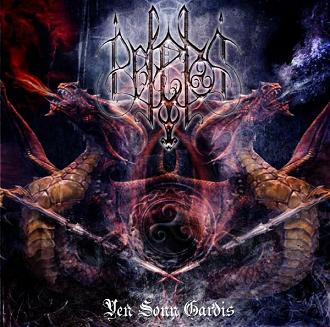
Belenos - „Yen Sonn Gardis” (2010)

Belenos

Yen Sonn Gardis”

Northern Silence Prod.

2010


Belenos comes from France, but I am not sure if I can say it is a french band. They (or actually him – cause this album is made by a single guy) live in Brittany, and album's lyrics are written in Celtic language. Anyway, this is band's 6th LP, but of course since I am a poser, I've never heard any of previous ones, even that band exist since 1995. But if they are as good as „Yen...”, I will surely change it...
The album starts with a heavy, doom and hypnotic riff. The first thing that comes to my ear is a perfect production. It is very heavy, quite clean and selective yet still have many underground dirt. It is not at all plastic, and suits to music perfectly. And what kind of music plays Belenos?
Every track has many tempo's changes, from quite slow to furious blast beats. On my ear, I hear influences of good, old Norwegian scene. Fast moments, like in a second „Hollved hirisus” sounds a bit like Immortal, or even „De Mysteriis Dom Sathanas” of such an unknown Norwegian band called Mayhem.
But beside this aggressive stuff there are many slow parts, which reminds me very much of old Burzum – like opening riff in „Ene kelt” or ending of „Baleerien an Are”. I hear also many elements of doom metal – for example a middle part of „Gorsedd” sounds a bit like it was inspired by Thergothon! Also very moody is opening riff in the last track called „En argoll”, and in many, many other places...
In „Gorsedd” we have an example of beautiful usage of Celtic folk music, played on violin. It gives a very good effect, together with guitar's solo passages and choirs. The whole album is filled with such part. Combined with heavy, doom riffs it gives an affect of melancholic and mystic atmosphere.
Above this musical layer we can hear many screams and growls. I have no question – it is very powerful, and sounds like a vocalist was possessed by a demon. Very aggressive and harsh, it only gives music more heaviness and make it much darker. Beside it, we can also hear many clean vocals (mainly in choirs), which from the other hand add many mystic aura to the whole album.
It is very hard to describe perfectly content of „Yen...”, due to the fact that every track is quite long (at least 5 minutes beside intro), and a lot is going on here. There are many new details that comes to ear with every playback, and beside that this is impossible to enjoy it if you can't focus completely on music. So forget about listening to it in tramway full of people... Also, even if I've written about inspirations I'd heard, these are only inspirations, not a rip off! This is an album played by an experienced musician, full of his individual ideas. You can hear it perfectly.
To sum this up: get this album. It is perfect for a gloomy, grey days that will come after this (and every other) summer. Belenos created a great piece of music.

Rate: 9/10
Vladyka

Tracklist:
1. Aspedenn
2. Hollved hirisus
3. Ene kelt
4. Skorn ha tan
5. Baleerien an Are
6. Gorsedd
7. Mestr ar c'hoad
8. Taol-digoll
9. En argoll

6/17/2013

Introduction to paganism - part III - germanic tradition


Introduction
This text contains only basic information about germanic native traditions. If you want to learn more - read some books, or go to links that I recommend you at the end of this article.

Sources and historical background
Christianization of germanic tribes was a very long proces. First baptized gemans are those who were living near Roman Empire, circa about IV A.D. The last christianized were swedish tribes (XII A.D.). Very often christian germanic kings were trying to send missions to other pagan germans, to take new worshippers of Christ under their reign.
The problem with germanic paganism is that we don't have many written texts about continental germanic tribes. Even if we have, these are things like Volsunga Saga, not saying much about Gods worshipped in the pagan era. We can get information from people who neighboured with germanic tribes (Germania by Tacitus) Our main sources are also scandinavian (nordic) sagas and Eddas – Poetic Edda and Prose Edda. Also we can learn much from archeology, linguistic, comparative mythology and folklore.
Remember also that what you find in Eddas and sagas are very often just a literature, written for fun of nobleman and other people.
In this article I will focus on scandinavian beliefs, which you can find in modern Asatru's beliefs.

Main Deities
Gods and Godess are divided into two kins, Aesirs and Vanirs. In the beggining there was a conflict between those kins, but it ended peacefully.
Gods of germanic people are not immortal and not perfect – they have to eat apples of Idunn to stay young. Aesirs and Frey will also die in Ragnarok – a Dawn of Gods. From the ashes of old world will arise another, better, ruled by offspring of fallen gods.

Aesirs
Odin (germ. Wotan, eng. Woden) – he is a main God of the whole germanic pantheon (although at the beginning the main God was Tyr), being a patron of warfare, wisdom, poetry and magic. In the past he was favourite God of nobleman and chiefs (kings). He created the world, together with His brothers Vili and Ve. He hung him up on the tree of the World, Ygddrasil, to get knowledge about secrets of the world. Hero of many myths, Odin represents a perfect, noble man. He will die during the Ragnarok, defeated by a great wolf Fenrir.
His is the ruler of Asgaard, the world of Aesirs.
His atributes are:
  • Two ravens, Hugin and Mugin, who brings him news from all the worlds.
  • Wolfes Geri and Freki.
  • Gungnir, his spear
  • a horse Sleipnir
  • Hlidskjalf, jis throne.

Thor (germ. Donar, eng. Thunor) – a son of Odin, god of thunder, storm, vitality, harvest and simple warriors, very similar to slavic god Perun and celtic Taranis. Thor's the strongest of all Aesirs, and is known for being a protector of Asgaard (the home of gods). Due to this fact, many people wear an amulet (Thor's hammer) to protect them from evil. Thor's hammer is also the most popular symbol of Asatru.
He is a hero of many myths, in which he mostly gives a proof of his strenght and honor. He is also much more "human" god than his father. Thor will die during the Ragnarok, after the killing of the Serpent of the World - Jormugand.
He's atributes are:
  • Thunder hammer Mjollnir
  • a charriot with two goats
  • a belt of strenght Megingiard
  • iron gloves of power

Tyr (germ. Tiu / Ziu, eng. Tiw) – at the begginig he was a god of sky, main deity of the pantheon of germanic tribes. But later his atributes were "stolen" by Odin. So Tyr is know mainly as a god of war, justice and oath. He lost his hand, which was warmed by the great wolf Fenrir. Known of his great courage, he will die during the Ragnarok in the fight with the dog called Garm.
His atributes are:
  • Tiwaz rune
  • only one hand (left)
  • often presented with a sword.

Baldr (germ. ?, eng. Bældæg) – a son of Odin, killed by his brother Hod after a trick of Loki. Known as a most beautiful and good of all gods. He is now in the kingdom of goddess Hel, but he will return after a Ragnarok, to rule new, better world.
He is a god of shinig and goodness, the most perfect creature of all beings.

Heimdallr – is a god of righteousness and light, defender of the rainbow bridge leading to Asgaard – Bifrost. He will play on his horn, Gjallarhorn, when the Ragnarok starts. And he will die in the duel with Loki.

Loki – is a giant of fire, adopted to Aesir's kin by Odin. An Allfather is also his bloodbound brother.
Known as a very chaotic god of cheat. He can take a form of any kind he'd like, and also change his sex. He is a hero of many myths, in which he once help Aesirs, and once do everything against them.
He tricked Hod to kill the most beloved of all gods – Baldr. As a punishment he was chainted onto a rock, whan a giant serpent spits on him a poison from time to time. His wife, Sigyn, holds a boal under Loki, so her husband didn't get injured by it.
He will break his change in a day of Ragnarok, and lead an army of giants and beasts against gods.

Bragi – a skaldic god, patron of poetry and singing (without magical approach).

Frigg (germ. Frijo, eng. Frige) – she's a wife of the highest god Odin, a patron of marriage, home, family, married women and births.
Very often she is identify with a Vanir Freya. It might be that in the beginning they were a one godess.

Idunn – a wife of Bragi, a keeper of apples giving gods their eternal youthfulness.

Ostara (eng. Ēostre)a goddes of spring, light, life fertility and a first sunrise (on the spring).

Vanirs
Njordr – is a god of seas and oceans, helpful to people. He lives in Asgaard, but after the Ragnarok he will return to his home-world (Vanaheim).
A father of Freyr and Freya.

Freyr – a god of fertility, vegetation, land, prosperity, and peace. He is one of the most important germanic gods, together with Odin and Thor. Even he's a Vanir, his fate is bounded with Aesirs and he will die during the Ragnarok.
His atributes:
  • a boar Gullinbursti
  • flying ship Skidbladnir
  • a ring Draupnir, given him after a Baldr's death
  • deer's horn.

Freya – a sister of Freyr, sometimes identified with Frigg. She is a goddess of fertility, love,sex and female magic – seidhr. Mostly worshipped by a women, she's most important goddess, together with Odin's wife. She is also the most beautiful of all women.
Her atributes are:
  • golden necklace Brisingamen
  • a robe, made from hawks' feathers

Other gods
Hel – she is a daughter of Loki. Odin has given her a kingdom of the dead – Helheim. It is a place where souls of those who has not fallen in battle will exist, until the day of Ragnarok.

Other creatures
Disir – a spirits bounded with a human kin, being defenders of specific family. They are identify as a forefathers, bounded with a goddess Freya. They help humans in everyday life.

Fylgia – a personal helping spirit of each man, often presented as a women or an animal. Similar to slavic Dola or christian guardian angel.

Valkyries – a women-spirit, servant of Odin. They are collecting a souls of fallen in battle, and guide them to Vallhala – a home of the Highest. They are sometimes associated with Fylgias.

Alfs (Elves) – they are living in a world of Alfheim, ruled by Freyr. They are a spirits of wild nature, sometims associated with a dead persons.
There are also Dark Alfs, living in the world of underground, called Dwarves.

Giants (Thurs') – a creatures fighting with a gods, incarnation of chaos and wild forces of the universe.

Worlds of Ygdrassil
Ygdrassil, A tree of The World, is a place where lies all of the know worlds:
Asgaard – a world of Aesirs.
Alfheim – world of alfs, ruled by Freyr.
Muspelheim – southern world of fire, a home of fire giants.
Vanaheim – home of Vanirs.
Midgard – a wolrd of living humans.
Jotunheim – a world of mountain giants.
Nilfheim – a frosty home of ice giants.
Svartalfheimunderground world of dark alfs (dwarves).
Hel – underground world of dead.

Main festivals
1st week of Ferbuary - Disablot a festival dedicated to Freyr, Freya and disirs.
20th / 21st of March – Ostara – a festival of spring and fertility, rebirthing of the world.
30th of April – Walpurgia's night – festival of goddesses bounded with magic and death (Frigg, Freya, Hel).
1st of May – day of Freyr and Freya, festival of fertility.
21st of June – Midsummer – a festival of summer. In this time ritual of Sunna's (Sun) blot must be performed.
1st of August – Lammas – a festival of harvest, bounded with Freyr and Freya,
1st of September – Day of Odin – a blot being perform to hail Odin
21st of September - Autumn Equinox - a festival ending a harvest, bounded with Freyr and Freya, but also with all gods being associated with fertility and vegetation.
12th of October - Alfarblot festival of fylgias, disirs and alfs.
20th / 21st of December – Yule – festival of passing winter. Blot is being performed mainly for Freyr, Freya and Thor.

Learn more:

And books:
John Lindow - Norse Mythology: A Guide to the Gods, Heroes, Rituals, and Beliefs.
Gabriel Turville-Petre - Myth and Religion of the North: The Religion of Ancient Scandinavia.
Kevin Crossley-HollandThe Norse Myths
H.R. Ellis Davidson - Gods and Myths of Northern Europe
And of course every source-text that you will find – Germania, Sagas and Eddas.

For polish-speaking people:
G. Dumezil - Bogowie germanów. Szkice o kształtowaniu się religii skandynawskiej (it can be difficult if you know nothing about a topic).
J. Ros – Heroje Północy (best translation of main scandinavian myths)
L.P. Słupecki - Mitologia Skandynawska w epoce Wikingów
L. Auerbach – Wikingowie i Germanie. Sagi ludów północy

Vladyka, June 2013
6/06/2013

Some things about Skyforger

I have many work on my university right now, so I have no much time for posting. But here's a few links that you may appreciate:

A very interresting blog of Peter from Skyforger about latvian and baltic history:

http://history.skyforger.lv/

And also a link which I cut from the upcoming interview with Skyforger - you can find here some latvian purely folk bands:

http://www.lauska.lv/

Hope you like it!

Vladyka